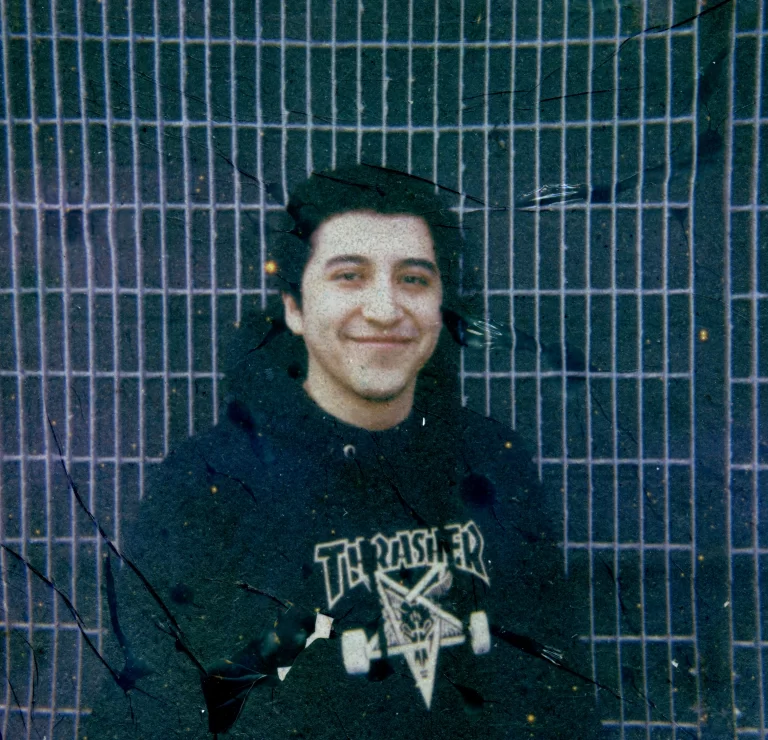
About Jesús
I was born in Puebla, Mexico. Neither of my parents nor any of my close relatives havebeen professional photographers as such. My relationship with photography began whenI was a child. My parents, uncles, and grandparents would gather to look at photo albums,in which the stories accompanying those images made me feel like part of somethinggreater. I believe the meaning of the photograph grew beyond the limitations that define itas a medium of visual and printed expression; it became embedded in me as a livingmatter, in my way of interacting and existing with photography.
This is how I can define my photography: as an event, the celebration of existence, theunion between object and memory that is imprinted in ink, silver, and life. Folklore andculture are crucial to my creative process, which is why the tradition of the photographer,under the rituals inherent to the profession, has captivated me since the first time I playedwith my fingers in front of a lamp in the darkness, until creating images for credentials. The entire process relieves me. I perceive myself as an artist, but with much of atechnician, both digital and analog, to such an extent that, in my search for perfection andpractice of this art, I have arrived at a new landscape, a new culture, and a new way ofseeing life—a new way of seeing myself.
What is it that I capture with my camera? What does my work feed on and consist of? I liketo feel driven, with emotion. I need my body to be in sync with what I am doing. I think it isimportant to feel that I have arrived at photography, that I have worked on it, and that therehas been a continuous construction to capture what my lens focuses on. I am constantlyreflecting on my surroundings, on my reality, and I believe this is another important aspectof my practice: questioning, seeking out my limitations.
In my practice, it is important to make my images feel like objects that help or connect withthose who view them. They should feel like an extension of the imagination that manifestsin objects deeply connected with us and our perception of our own nature. I fear oblivion,the solitude of anonymity. I seek for my lens to serve as a tool for memory, that existenceis celebrated and not just remembered.
Why analog? It is my way of learning. I need to write in a notebook. When I study French, Ilike to use a printed book. I prefer going to the cinema. I enjoy playing football more thanwatching it. There is an element of interaction, the manipulation of objects. Thephotographic film is, beyond a tool, a unique object. It is a connection with others, bothbefore and after me. It is a great roll that is cut for everyone.